 How-to
Does Solar Panel Cleaning Improve Efficiency?
Last Updated: November 14, 2026
Quick Summary
Yes, solar panel cleaning can recover lost output when dirt, dust, droppings or leaves block sunlight from the cells. The gain depends on how dirty the panels were and how long the soiling built up, so checking your own inverter data before and after a clean is the most reliable way to judge it.
- Bird droppings do the most damage per square centimetre because one shaded cell can pull down a whole string.
- Most cleaning recovery comes from removing thick, uneven layers rather than thin everyday dust.
- Compare output on clear days with similar sunlight before and after a clean using your inverter monitoring app.
- Rinse panels first, then wash gently, since scrubbing dry dust can leave fine scratches that cut light transmission.
- Inspect panels every two to three months and after dust events or bird activity, rather than cleaning on a fixed calendar.
Table of Contents
- How Dirt, Dust and Bird Droppings Reduce Solar Panel Output
- How Much Performance Cleaning Can Actually Recover
- When Cleaning Is Worthwhile and When It Isn't
- How Often to Clean Solar Panels in the Riverina
- How to Remove Bird Droppings From Solar Panels
- How to Clean Solar Panels Safely
- Professional Cleaning Versus DIY: Measuring the Cost Against the Gain
- Booking Your Next Solar Panel Clean
- Frequently Asked Questions
How Dirt, Dust and Bird Droppings Reduce Solar Panel Output
Solar panels lose output when a layer of dirt, dust or droppings sits on the glass and blocks sunlight from reaching the cells. Soiling is the term used for this build-up, and it is one of the most common reasons a healthy system underperforms. Red dust, pollen, leaves and bird droppings are the usual culprits in the Riverina.
Bird droppings do the most damage per square centimetre. A single dropping can shade a whole cell, and in a series-connected array, one shaded cell can pull down the output of an entire string. That is why a small patch of mess can cost more than the same area of general dust.
Dust works differently. It settles evenly and reduces light transmission across the whole panel. It rarely causes a dramatic drop on its own, but it adds up over weeks of dry weather. Rain helps, but it does not always clean the glass. Light rain often leaves a dusty film behind, and the residue can bake on as the panel heats.
How Much Performance Cleaning Can Actually Recover
Cleaning can recover lost output, but the gain depends on how dirty the panels were and how long the soiling had been building up. Most of the recovery comes from removing the thick, uneven layers rather than the thin film of everyday dust.
Be cautious with large headline numbers. Large headline percentages for cleaning gains should be checked against your own system data before you rely on them. The real gain on your roof depends on the condition of the panels, the weather and the sunlight available that week.
The most reliable way to judge the gain is to compare your system's output before and after a clean, on days with similar sunlight. Your inverter monitoring app usually shows this data. A clear, measured improvement tells you more than any general estimate.
When Cleaning Is Worthwhile and When It Isn't
Solar panel cleaning is worth the effort when the panels are visibly coated, when droppings or leaves sit on the glass, or when output drops without a clear cause. It is less useful when the panels are already clean after recent rain, or when the system is heavily shaded by trees or nearby buildings, because shading costs more output than dust does.
A simple decision rule helps. Check the output on a clear day, compare it with a clean day in the same season, and look at the panels in good light. If the gap is large and the glass is visibly dirty, cleaning is likely to pay off. If the panels look clean and output is steady, leave them alone.
Watch out: scrubbing dry dust across the glass can scratch the surface and leave fine marks that reduce light transmission over time. Rinse first, then wash gently.
How Often to Clean Solar Panels in the Riverina
There is no single correct interval. The right frequency is set by how fast soiling builds up on your roof, how much rain actually rinses the glass, and how much output you stand to lose. A blanket 'every few months' schedule is a starting point, not a rule.
Work through these local factors instead:
- Rainfall pattern. Steady, heavy rain that falls often enough to sheet across the glass keeps panels reasonably clean. Light, infrequent rain is worse than no rain at all, because it wets the dust and leaves a film that bakes on as the panel heats. In a dry spell, dust accumulates for weeks with nothing to wash it off.
- Soiling type. Red dust and agricultural dust settle evenly and build gradually. Pollen arrives in a short seasonal burst and can coat the glass within days. Bird droppings and leaves are localised but do far more damage per square centimetre, so they justify an immediate spot clean rather than waiting for the next scheduled wash.
- Roof pitch and exposure. A steeply tilted array sheds dust and rain more effectively than a shallow one. Panels near trees, dirt roads, stock yards or construction sites collect more debris and need checking more often.
- Season. Late spring and summer pollen, summer dust storms and autumn leaf fall are the periods when soiling accelerates. Winter rain often does more of the cleaning for you.
A practical approach is to inspect the panels visually every two to three months, and immediately after any dust event, nearby fire, or obvious bird activity. Clean when the glass is visibly coated, when droppings or leaves are present, or when monitoring shows output falling on clear days without another explanation. If the panels look clean and output is steady, defer the clean.
Watch out: a fixed calendar schedule can lead you to scrub clean glass unnecessarily, which adds wear and risk without any gain, while missing a sudden soiling event that actually costs output.
The right cleaning interval depends on local conditions, which the table below summarises.
| Factor | What it affects | Practical note |
|---|---|---|
| Rainfall pattern | How well glass is rinsed | Light, infrequent rain can leave a film that bakes on |
| Soiling type | How fast soiling builds | Bird droppings justify an immediate spot clean |
| Roof pitch and exposure | How much dust and debris collects | Steep arrays shed more; near trees or dirt roads means more checks |
| Season | When soiling accelerates | Late spring and summer pollen, summer dust, autumn leaf fall |
| Inspection | When to check | Every two to three months, and after dust events or bird activity |
How to Remove Bird Droppings From Solar Panels
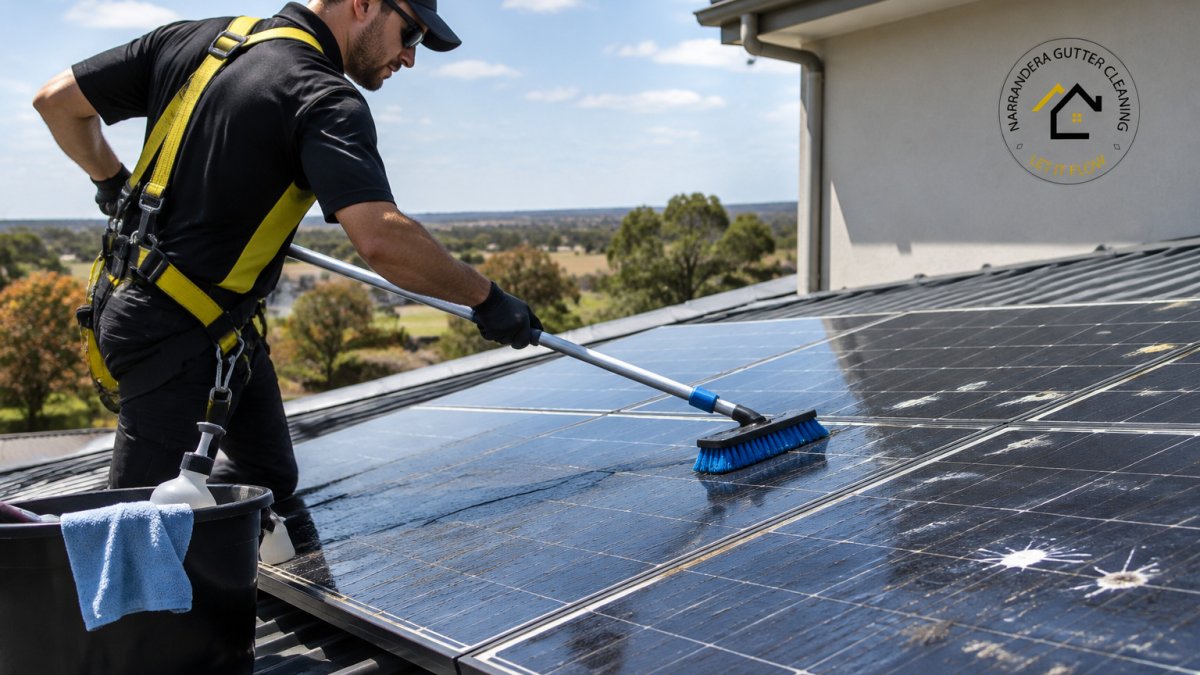
Bird droppings are best removed as soon as you notice them, before they dry and bond to the glass. Rinse the area with plain water first to soften the mess. Then use a soft cloth or sponge with a mild, non-abrasive cleaner, working gently in small circles.
Avoid steel wool, abrasive pads and harsh chemicals, which can damage the anti-reflective coating. If droppings have baked on, leave them to soak for a few minutes before wiping. Repeated soaking is more effective than harder scrubbing.
How to Clean Solar Panels Safely
Safe cleaning starts with the roof. Work from a stable ladder, never lean out over the edge, and avoid cleaning in direct afternoon sun, when the glass is hot and water dries before it can lift the grime. Turn the system off at the inverter if you are handling the panels or the wiring, and keep water and electricity well apart.
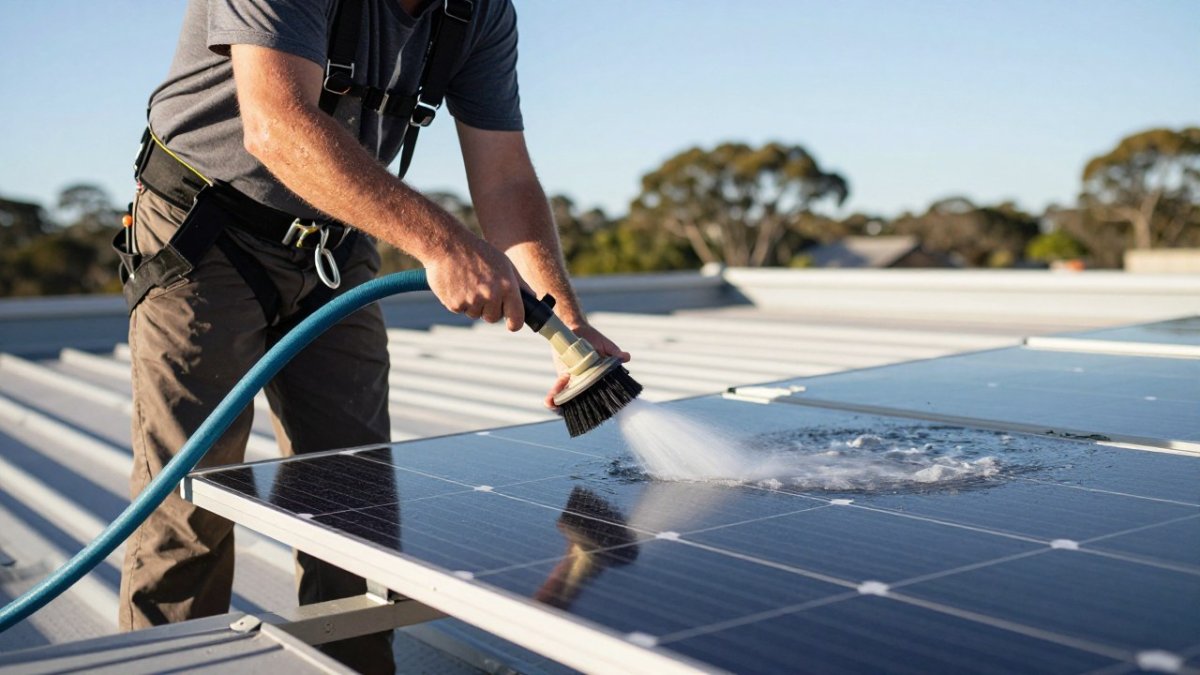
Use soft brushes, a low-pressure hose and demineralised water where possible, because tap water can leave hard-water spots. Check your panel manufacturer's instructions and your warranty terms before you start, since some warranties specify approved cleaning methods. High-pressure washers can damage seals and glass, so they are best avoided.
If the roof is steep, high or fragile, it is safer to hire someone with the right equipment and insurance than to take the risk yourself.
Professional Cleaning Versus DIY: Measuring the Cost Against the Gain
A DIY clean costs little more than your time, a soft brush, a low-pressure hose and possibly some demineralised water. The trade-offs are safety and thoroughness, especially on a two-storey home, a steep roof or a fragile surface. A professional clean brings access equipment and safe handling of the array.
To decide whether paying is justified, measure rather than guess. A fair before-and-after comparison needs to separate the cleaning gain from normal variation:
- Record a baseline. For several clear days before cleaning, note the daily generation figure from your inverter monitoring app, along with the weather and any shading.
- Clean, then record again. Compare days with similar sunlight, season and temperature. A like-for-like comparison on clear days is far more reliable than a single day's reading.
- Account for confounders. Seasonal sun angle, cloud, shade from trees or buildings, system downtime and inverter faults all move output independently of soiling. If any of these changed between your baseline and after-clean readings, the comparison is not clean.
- Express the gain in dollar terms. Multiply the measured daily gain in kilowatt-hours by your electricity tariff, then scale to the period between cleans. That gives an indicative value of the recovered generation.
- Compare against the quoted cost. If the recovered value over a cleaning cycle is less than the quoted price, a DIY clean or a longer interval may be the better choice. If the panels are hard to reach or the measured gap is large, a professional clean is more likely to pay.
A common pattern is that the gain is largest when panels are heavily soiled and smallest when they are only lightly dusty, so the economics improve the dirtier the array and the higher your tariff. Treat any headline percentage as a prompt to measure your own system, not as a promise.
For current pricing, check the Narrandera Gutter Cleaning pricing page on the website or request a quote.
Booking Your Next Solar Panel Clean
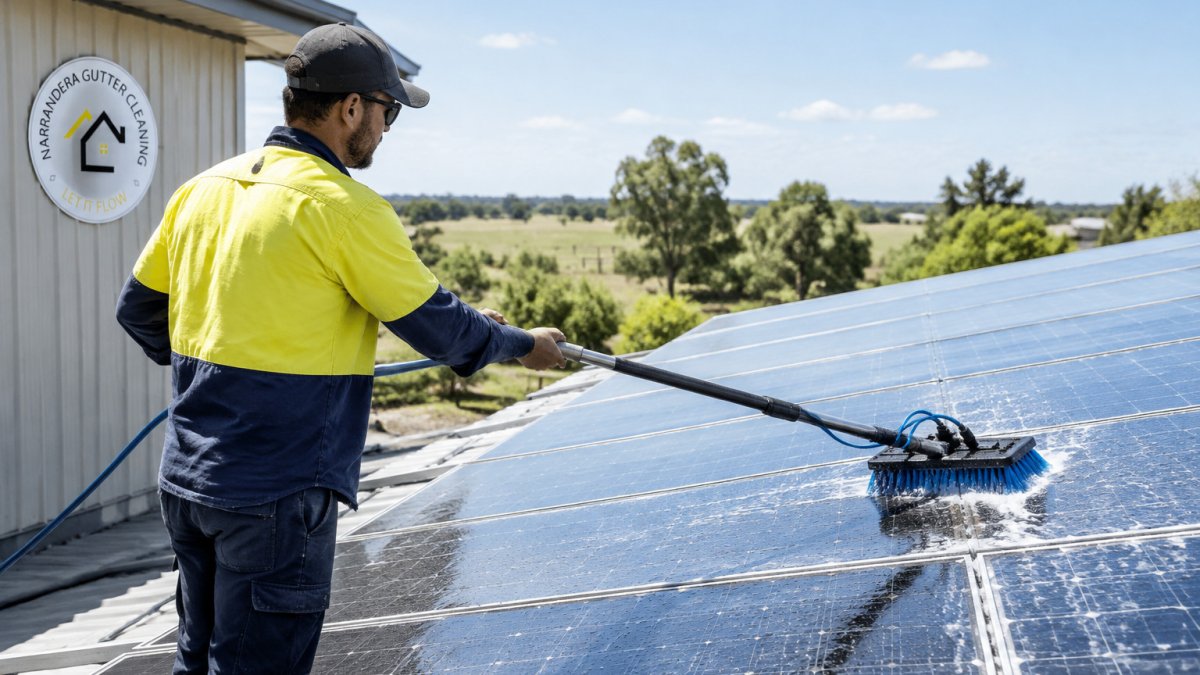
If your output has dropped, the panels are visibly dirty, or the roof is difficult to reach, a professional clean can be the simplest fix. Narrandera Gutter Cleaning provides solar panel washing across the Riverina. The team is fully insured and has a 5-star rating.
To get a clear picture of what your system needs, request a quote and find out what a clean would involve for your property.
Frequently Asked Questions
Does cleaning solar panels improve their efficiency?
Yes, when panels are visibly soiled. Dust, pollen, dirt and bird droppings block sunlight from reaching the cells, and removing them can restore lost output. The size of the gain depends on how dirty the panels were and what caused the soiling. The size of the gain varies with the type of soiling. Checking your inverter's monitoring data before and after a clean is the most reliable way to see the real difference on your system.
How often should solar panels be cleaned?
Cleaning frequency depends on local conditions, with extra attention after dust storms, bushfire smoke or long dry spells in the Riverina. Rain clears much of the loose dust on steeper roofs, but it does little for bird droppings, sap or caked-on dirt. Panels on low-pitched roofs or near trees and bird perches may need cleaning more often. Watch your output data; a drop that does not match the weather is a good signal to clean.
What is the safest way to remove bird droppings from solar panels?
Wait until the panel is cool, then rinse the dropping with plain water from a hose on low pressure to soften it. Use a soft brush or sponge with a mild, non-abrasive cleaner if needed, and avoid scrubbing hard, which can scratch the glass coating. Do not use a high-pressure washer, abrasive pads or household solvents. For droppings on a roof or on a two-storey property, a professional with proper fall protection is the safer option.
Is it safe to clean solar panels yourself?
It can be, if you use a stable ladder on firm ground, avoid working on a wet or steep roof, and keep water away from the electrical connections and junction boxes. Never use a metal brush, a pressure washer or any tool that could damage the glass or frame. Panels are live whenever the sun is up, so keep the system switched off where practical and follow the manufacturer's cleaning instructions, which may be a condition of your warranty. If the work involves height, access problems or electrical components, paying a professional is usually the better choice.