 How-to
How to Clean Two Storey Gutters Safely
Last Updated: October 26, 2026
Quick Summary
Cleaning two storey gutters safely means working from the ground with telescopic poles, hose-end wands or a gutter vacuum rather than from a ladder. Two-storey gutters sit roughly four to six metres up, so call a professional when the roofline is steep, fragile or out of safe reach.
- Measure to the top of the gutter, not the roof, when choosing a pole or wand.
- A gutter vacuum handles wet, compacted debris that wands and scoops struggle with.
- Work in sections starting furthest from the downspout and push debris toward the outlet.
- Most two-storey homes need gutters cleaned at least twice a year.
- Never force water into a blocked downpipe at full pressure or the pipe can split.
Table of Contents
- Why Two Storey Gutters Need a Different Approach
- Two-Storey Gutter Cleaning Tools That Work From the Ground
- Gutter Cleaning From the Ground: Step-by-Step
- How to Unblock a Downpipe and Confirm Drainage
- How Often to Clean Gutters on a Two-Storey Home
- Requesting a Free Quote for High Gutter Cleaning
- Frequently Asked Questions
Why Two Storey Gutters Need a Different Approach
Cleaning two storey gutters is a ground-level job, not a ladder job. Work from the ground with telescopic poles, hose-end wands or a gutter vacuum, and call a professional when the roofline is steep, fragile or out of safe reach.
Two-storey gutters sit roughly four to six metres up, well beyond a step-ladder job.
The fall risk on second-storey gutters
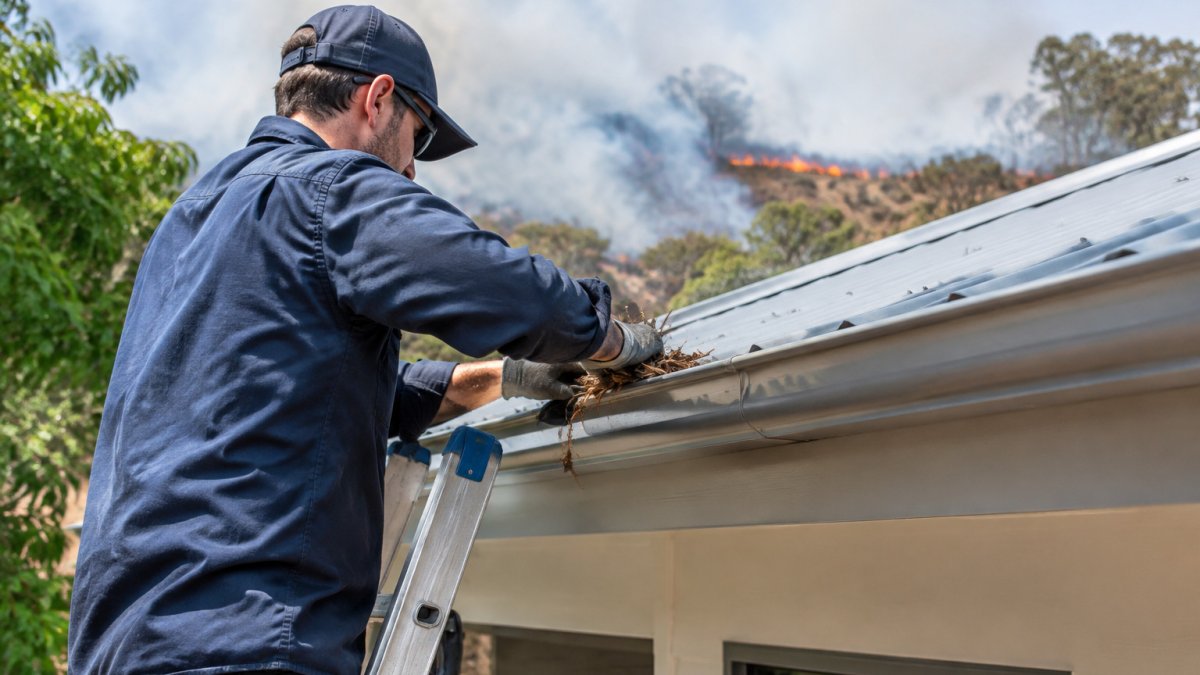
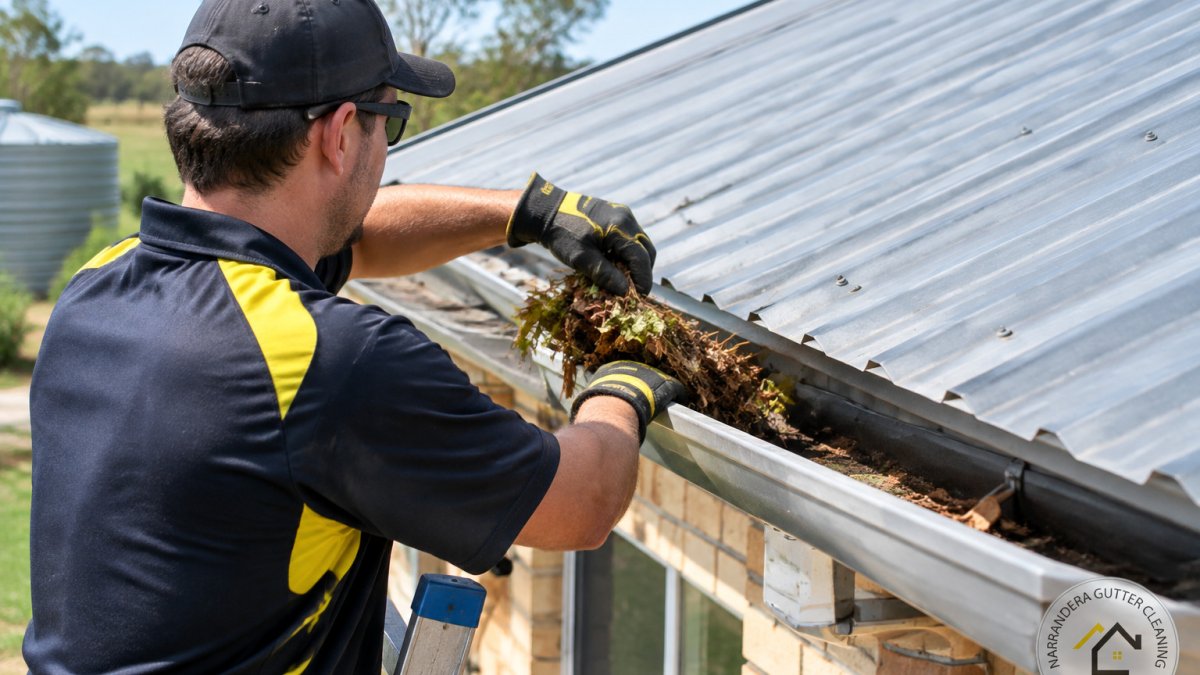
Ladder work at height is where gutter cleaning turns dangerous. Safe Work Australia's guidance on falls from height treats falls as one of the leading causes of serious injury on residential and commercial properties.
The risk climbs fast on a two-storey home:
- The base is often uneven grass, garden beds or paving
- The reach puts you well above a standard ladder's safe zone
- Wet leaves and moss make rungs and roofs slippery
The practical rule: if you cannot reach the gutter with both feet on the ground, treat it as a professional job or a pole job. Never a ladder-and-hope job.
Two-Storey Gutter Cleaning Tools That Work From the Ground
Ground-based tools remove the fall risk entirely, but they are not interchangeable. The right choice depends on gutter height, debris type, access and your confidence on a pole.
The four questions that pick your method
- How high is the gutter? Measure to the top of the gutter, not the roof. A pole or wand must reach four to six metres with the head still controllable, if it wobbles at full extension, it is too short.
- What is the debris? Dry leaves and twigs suit a scoop or brush pole. Wet, compacted leaves, seed pods and moss suit a gutter vacuum. Fine grit and dust need water to flush.
- What is the access? Long runs, tight side paths, sloping ground and garden beds affect setup. A vacuum kit needs somewhere to stand the unit; a hose wand needs a tap within reach.
- What is your skill and confidence? A hose wand is the most forgiving; a vacuum pole kit has a learning curve. Ladder work at two-storey height is a risk question, not a skill question.
Method-by-method trade-offs
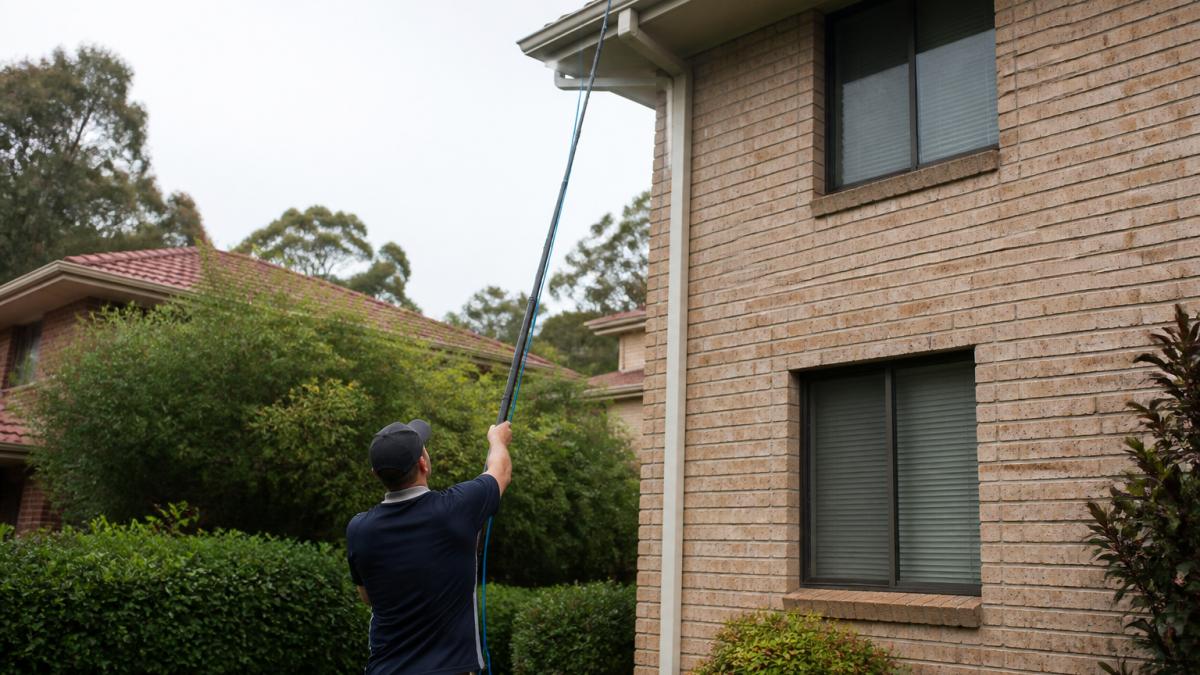
Telescopic hose wands attach to a garden hose and reach about four or five metres; an angled head directs water along the channel. They are cheap, light and easy to store, but only push debris, heavy material can be washed toward the downspout and block it.
Extendable cleaning poles with a scoop or brush drag debris toward you or push it to the downspout. They work well on dry leaves and light build-up, but smear wet debris and can catch on brackets.
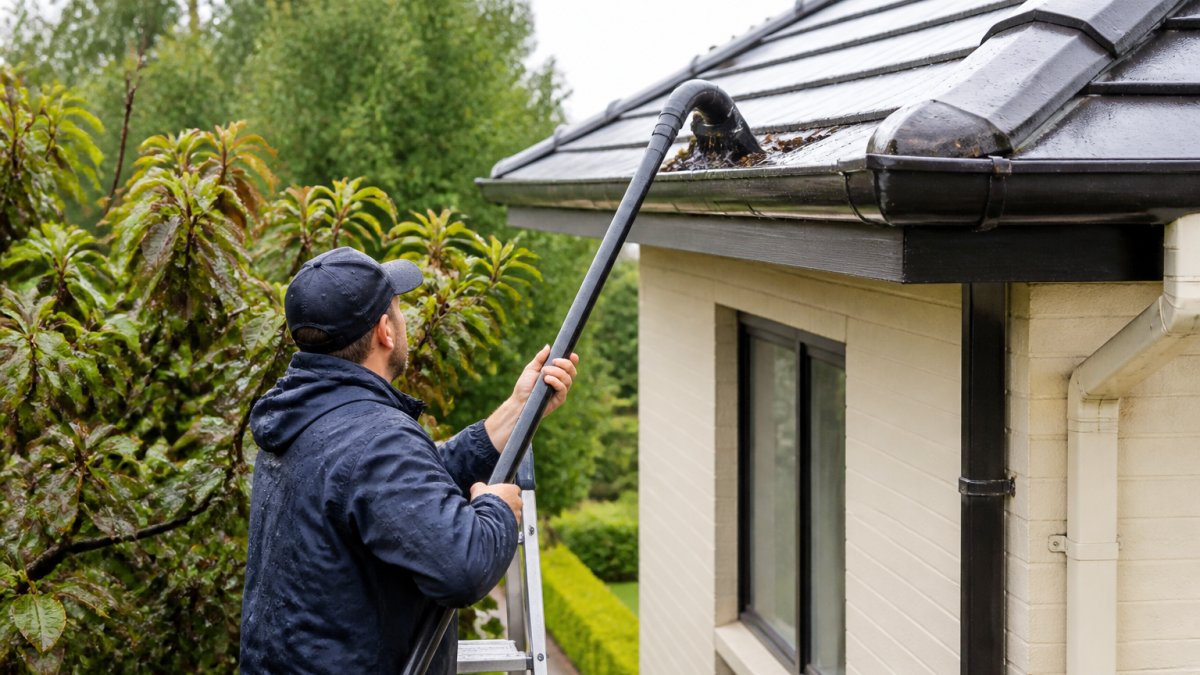
Gutter vacuums use a high-reach vacuum pole kit to suck out debris without water. They handle wet, compacted and stubborn debris that wands struggle with, and leave less mess below.
| Method | Typical reach | Best for | Main limitation | Setup time |
|---|---|---|---|---|
| Telescopic hose wand | 4-5 m | Flushing light debris, dust and grit | Weak on compacted leaves; can push blockages downstream | Low |
| Extendable pole + scoop | 4-6 m | Dry leaves and twigs | Awkward on wet debris; can snag on brackets | Low |
| Gutter vacuum + pole kit | 5-8 m | Wet, heavy, stubborn debris; long runs | Higher upfront cost; more setup | Medium to high |
| Ladder cleaning | Varies | Single-storey only | Serious fall risk at two-storey height | Medium |
| Professional service | Any height | Steep, fragile or high rooflines; guarded gutters | Ongoing cost | None |
Which method for which situation
- Low-pitch roof, few trees, dry leaves: a scoop pole for the bulk, then a hose wand to flush. This is the cheapest reliable combination.
- Gum trees or heavy leaf fall, wet compacted debris: a gutter vacuum is the better tool. Wands and scoops struggle once leaves have matted down.
- Long single-storey run at the lower end of a two-storey home: a wand plus pole is usually enough, provided you can see the channel from the ground.
For most two-storey homes, a wand plus a pole covers routine work; a vacuum kit wins when debris is heavy or the roofline is hard to reach. Start with the cheapest tool that matches your debris and upgrade only if it fails.
Gutter Cleaning From the Ground: Step-by-Step
Gutter cleaning from the ground works in a fixed order: check the conditions, clear the large debris, flush, then confirm the water flows away.
Before you start: the stop-work checklist
Run through this every time. If any item fails, fix the condition or book a professional.
- Ground under the work area: stable, dry and level. No soft garden beds, no slope, no loose paving.
- Weather: no rain, no wind strong enough to move the pole or blow debris back at you, and no storms forecast. Wet leaves are heavier and more slippery, and wind makes a long pole unpredictable.
- Power lines: look up before you raise anything. Keep poles, wands and ladders well clear of overhead lines and where the service line meets the house. If a line runs close to the gutter, stop, this is a job for a licensed professional.
Clearing leaves, twigs and stubborn debris
- Set up safely. Wear gloves and eye protection, and check the ground below for people and pets.
- Work in sections, starting at the end furthest from the downspout and moving toward it so debris is pushed toward the outlet.
- Pull large debris toward you with the pole or scoop, or vacuum it out. Drop it into a bucket, not onto the garden.
- Loosen compacted debris with the pole before flushing, dry, caked material will not shift with water alone.
- Check gutter guards as you go. Clear debris on top of the mesh so water can pass through, and do not force a scoop under mesh; it can lift or distort the guard.
- Work in short passes. Long sweeps with a fully extended pole are hard to control and can damage the gutter edge or brackets.
Flushing the gutters and checking water flow
Run water from the hose-end wand along the channel, starting high and working toward each downspout. Watch for three things:
- Water flowing freely toward the outlet
- No pooling or backing up in the channel
- Water discharging steadily from the bottom of the downspout
If water backs up, the blockage is downstream. If water flows but slowly, the channel may still be partly restricted, flush again from the high end before assuming it is clear.
Damage prevention and post-clean inspection
A clean gutter is only a success if it is still intact. After flushing, check visually from the ground with binoculars or a phone camera on a pole:
- Sagging or pulling away from the fascia: a sign of blocked gutters holding water, or failed brackets. Book a repair before the next rain.
- Leaks at joints and corners: look for water staining on the fascia or eaves below the joint.
- Corrosion or rust spots: common on older steel gutters, and a sign the channel is nearing the end of its life.
Takeaway: the job is not finished when the water flows. It is finished when the water flows, the downspout discharges, and the gutter is still firmly attached with no new leaks or sagging.
How to Unblock a Downpipe and Confirm Drainage
An unblocked downpipe shows steady flow at the bottom outlet with no gurgling or overflow at the top. Flush from the top first, then work from the bottom if water still will not move.
- Tap the downpipe. A dull thud suggests a blockage; a hollow ring suggests it is clear.
- Flush from the top with a hose. If water backs up, the blockage is below.
- Feed a plumber's snake or drain rod down from the top, or up from the bottom outlet.
- Flush again and watch the outlet. Steady, clear flow means the job is done.
- Check the ground at the outlet. Water should drain away from the foundation, not pool against it.
Watch out: never force water into a blocked downpipe at full pressure. The pipe can split at a joint, and the water will end up inside the wall cavity instead of the stormwater system.
How Often to Clean Gutters on a Two-Storey Home
Most two-storey homes need gutters cleaned at least twice a year, and more often where trees overhang the roof or seasonal debris is heavy. In the Riverina, red dust, dry leaves and storm debris build up quickly, so many properties need a clean every three to four months.
Use this as a starting schedule:
- Twice a year: homes with few nearby trees
- Every three to four months: homes under gum trees or with heavy leaf fall
- Monthly checks in storm season: clear debris after big wind events
Cleaning frequency matters for more than looks. Blocked gutters overflow into eaves and timber, dry debris is a bushfire risk, and dust on panels cuts solar output.
Requesting a Free Quote for High Gutter Cleaning
Some two-storey gutters should not be a DIY job at all.
At Narrandera Gutter Cleaning, we clean high gutters with an industrial gutter vacuum system, so there is no ladder against your roofline and no risk to you.
We are fully insured and hold a 5★ rating, servicing residential, commercial and rural properties across the Riverina, including farms well out of town.
Get started with Narrandera Gutter Cleaning and book a free quote for your two-storey gutter clean.
Frequently Asked Questions
Can you clean two-storey gutters from the ground?
Yes, in most cases. Telescopic poles, hose-end wands and gutter vacuum pole kits let you reach second-storey gutters while standing safely on the ground. These tools work best for loose leaves, twigs and light debris. Heavily packed or wet debris, or gutters with guards fitted, may need a closer inspection. Working from the ground removes the fall risk that comes with ladders on a two-storey home.
What is the best gutter cleaning tool for a two-storey house?
A gutter vacuum with a pole kit is the most effective ground-based option for two-storey gutter cleaning tools, because it lifts debris out rather than pushing it along. A telescopic wand connected to a garden hose is a cheaper alternative for flushing light debris. Both let you clean from the ground. Choose based on how much debris you get and whether your gutters have guards fitted.
How do you check whether a downpipe is blocked?
Run a garden hose into the gutter near the downpipe outlet and watch the water flow at the base. If water backs up in the gutter or trickles slowly, the downpipe is partly or fully blocked. You can also tap the downpipe to listen for a dull, packed sound. For how to unblock a downpipe, flush from the top first, then use a plumber's drain rod or hose from the bottom outlet if water still will not run clear.
When should you hire a professional to clean high gutters?
Call a professional when gutters are packed with wet or compacted debris, when guards need removing and refitting, when the roofline is steep or fragile, or when you cannot safely reach the gutters from the ground. If you are unsure about ladder safety or the height makes you uneasy, stop and book a professional. A fully insured local service can clean high gutters safely and check the downpipes and drainage at the same time.