 How-to
How to Clean Gutters Before Summer: A Safety Guide
Table of Contents
- Why Cleaning Gutters Before Summer Protects Your Home
- How Often to Clean Gutters in the Riverina
- Signs Gutters Need Cleaning Before the Heat Arrives
- How to Clean Gutters Safely: Step by Step
- Your Gutter Cleaning Checklist for Summer Preparation
- Request a Free Quote for Pre-Summer Gutter Cleaning
- Frequently Asked Questions
Last Updated: November 17, 2026
Why Cleaning Gutters Before Summer Protects Your Home
Cleaning gutters before summer is the most important spring maintenance job for a Riverina homeowner. It clears the debris that turns a dry roof into a fire risk and a storm into a water damage claim. The homes that suffer are often the ones that skipped the pre-summer clean.
Summer here is a double threat: weeks of dry heat bake the leaves in your gutters, then a fast storm dumps a month of rain in an hour. Blocked gutters fail both ways. This guide covers why clean gutters matter, when to schedule the job, and how to do it safely.
Storm Season and the Water Damage Chain
A blocked gutter starts a chain reaction. Rainwater backs up, spills over the edge, and lands where it should never sit: against the fascia, down the wall, and into the footings. From there it is timber rot, mould growth, and cracked foundations.
By then the damage is well advanced. The Bureau of Meteorology's severe weather guidance is clear that intense short bursts of rain are the pattern to plan for, not steady drizzle. Your gutters have to move a lot of water fast.
Dry Debris, Ember Attack and Fire Risk
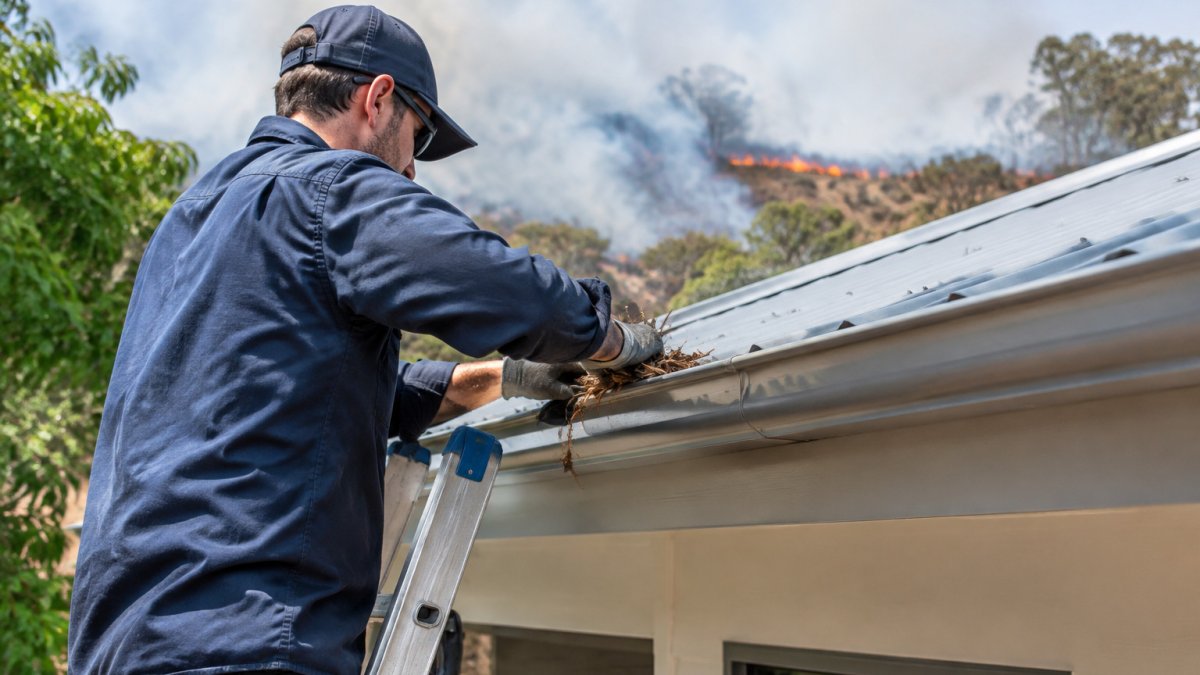
Here is what most guides miss. In a fire-prone landscape, a gutter full of dry leaves is a fuel bed attached to your roof. Embers land in it, smoulder, and ignite the timber underneath.
So cleaning gutters is not just about water, it is about removing the material that catches a spark. If you live near grassland, scrub or pine, this matters more than anything else on your list. See our full guide to preventing bushfire damage to home gutters.
How Often to Clean Gutters in the Riverina
But a fixed number is a starting point, not a schedule.
1. Vegetation load. Deciduous trees drop in autumn, so the post-autumn clean is non-negotiable if you have them.
2. Wind-blown soil and seed. Red dust, dry grass seed and topsoil settle in gutters and set like concrete once wet.
3. Rainfall pattern. Plan for intense short bursts, not steady drizzle, so your gutters have to move a lot of water fast.
A simple calendar that works for most local properties:
- Late winter (August-September): clear the wind-blown soil and seed load and check brackets before the spring winds.
- Late spring (November): the pre-summer clean. Clear everything, test every downpipe, and confirm fall toward the outlets.
- Post-autumn (May-June): clear leaf drop and re-check after the first big rain.
- After any major storm or wind event: inspect the valley and outlets, even if the calendar says you are not due.
A common mistake is judging the job by what you can see from the ground.
If you want the local breakdown by season, our guide to how often to clean gutters in the Riverina covers it month by month.
A simple calendar that works for most local properties.
| Timing | What to do |
|---|---|
| Late winter (August-September) | Clear wind-blown soil and seed load; check brackets |
| Late spring (November) | Pre-summer clean; test every downpipe; confirm fall |
| Post-autumn (May-June) | Clear leaf drop; re-check after first big rain |
| After any major storm or wind event | Inspect the valley and outlets |
Signs Gutters Need Cleaning Before the Heat Arrives
Look up after the first heavy rain. If water is running down the fascia instead of out the downpipe, the gutter is likely blocked.
Other common warning signs include:
- Plants or grass growing out of the gutter line
- Stained or streaked walls below the roofline
- Sagging gutter sections pulling away from the fascia
- Water pooling near the footings after rain
- Birds or insects nesting under the eaves
- Overflow stains on the outside of the downpipe
Any one of these means the system is not doing its job. Two or more means you should not wait for summer.
How to Clean Gutters Safely: Step by Step
Safety comes before speed. Most gutter injuries happen on ladders, not roofs, so set up properly and work in short sessions. Never clean alone, and never work near powerlines.

Follow this order:
- Check the forecast. Work on a dry, calm day. Wet leaves are heavy and slippery, and wind makes a ladder unstable.
- Set the ladder right. Firm, level ground, one metre above the roofline, tied off where possible. A ladder angle of about 75 degrees, roughly one metre out for every four metres up, is the safe standard. Face the ladder, keep your hips inside the stiles, and move the ladder rather than overreaching.
- Wear the gear. Gloves, safety glasses, non-slip shoes, and long sleeves. Glasses matter more than people expect: dry debris and dust flick up as you scoop.
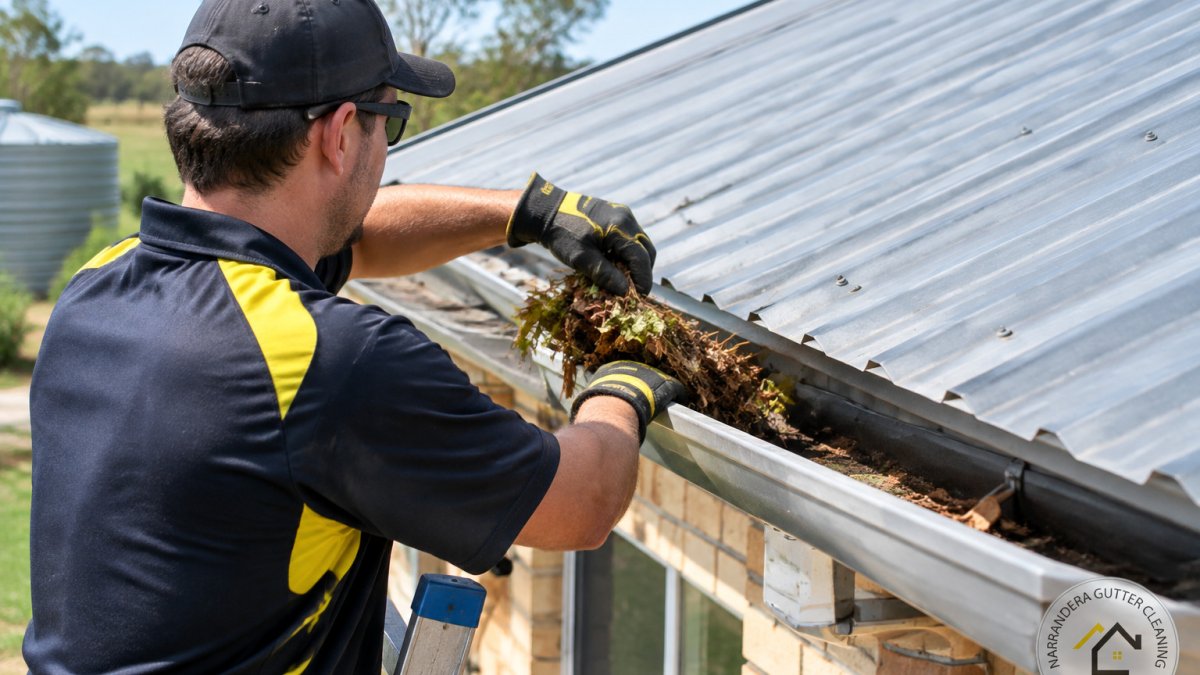
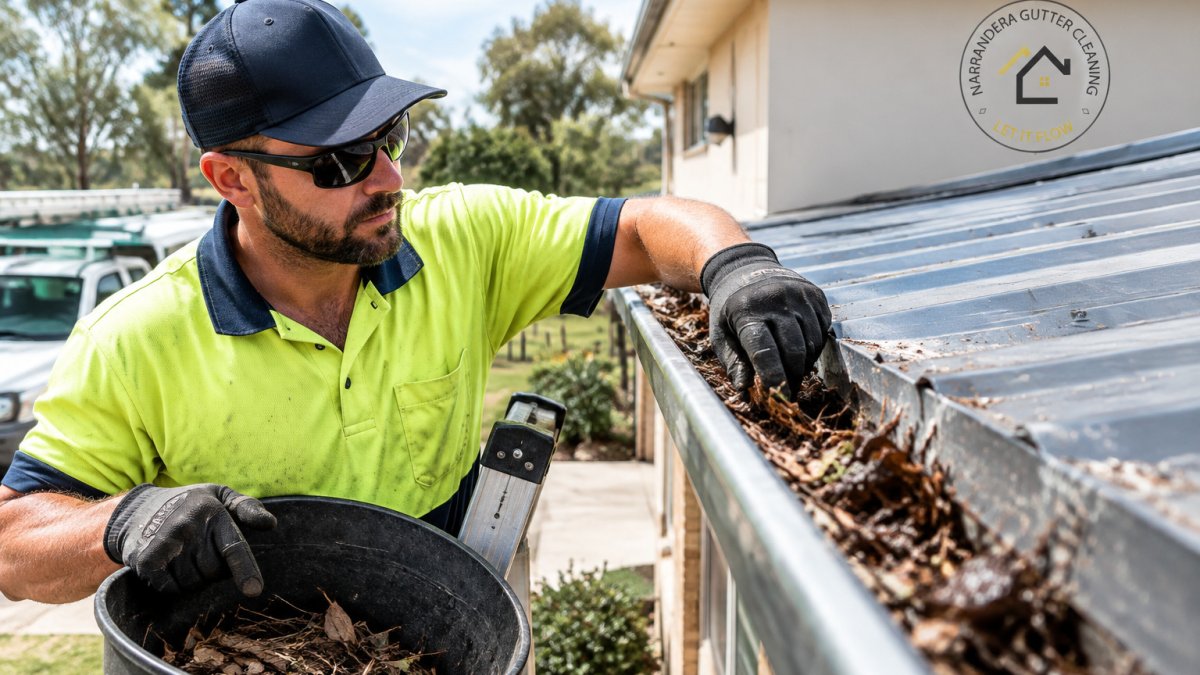
- Scoop, don't hose. Remove debris by hand or with a scoop into a bucket. Hosing first pushes the mess into the downpipe and can add weight to a gutter already straining.
- Work away from the downpipe. Clear the high end first so water has somewhere to go, and so you are not standing under a load of wet debris.
- Flush and test. Run water through and watch it exit the downpipe, one section at a time so you can tell where a problem is.
- Bag the waste. Organic waste can go to compost. Keep it off the lawn near the house, where it holds moisture against the walls.
For two-storey homes, the risk jumps sharply. Our guide to cleaning two storey gutters safely covers harnesses, pole tools, and when to stop and call someone.
Downpipes and Drainage Checks
A clear gutter with a blocked downpipe is still a failed system. Test each downpipe with a hose and listen for water moving freely. If it backs up, work from the bottom: many blockages sit at the outlet or first bend, where a plumber's rod or stiff hose can clear them.
Check that water discharges well away from the footings. A downpipe that dumps at the base of the wall is doing half its job, and the water it releases will find the footings. Also confirm the gutter falls toward the downpipe, not away from it.
Your Gutter Cleaning Checklist for Summer Preparation
Run through this before the first hot spell. It takes an hour and prevents most summer failures.
- Remove all leaves, twigs, and accumulated debris from gutters
- Clear every downpipe and confirm free flow
- Check gutter brackets and re-secure any loose sections
- Inspect for rust, cracks, and separated joints
- Confirm water flows away from the footings
- Trim overhanging branches back from the roofline
- Check the roof for loose tiles or lifted iron
- Look for signs of pests or nesting under the eaves
- Repeat the check after the first major summer storm
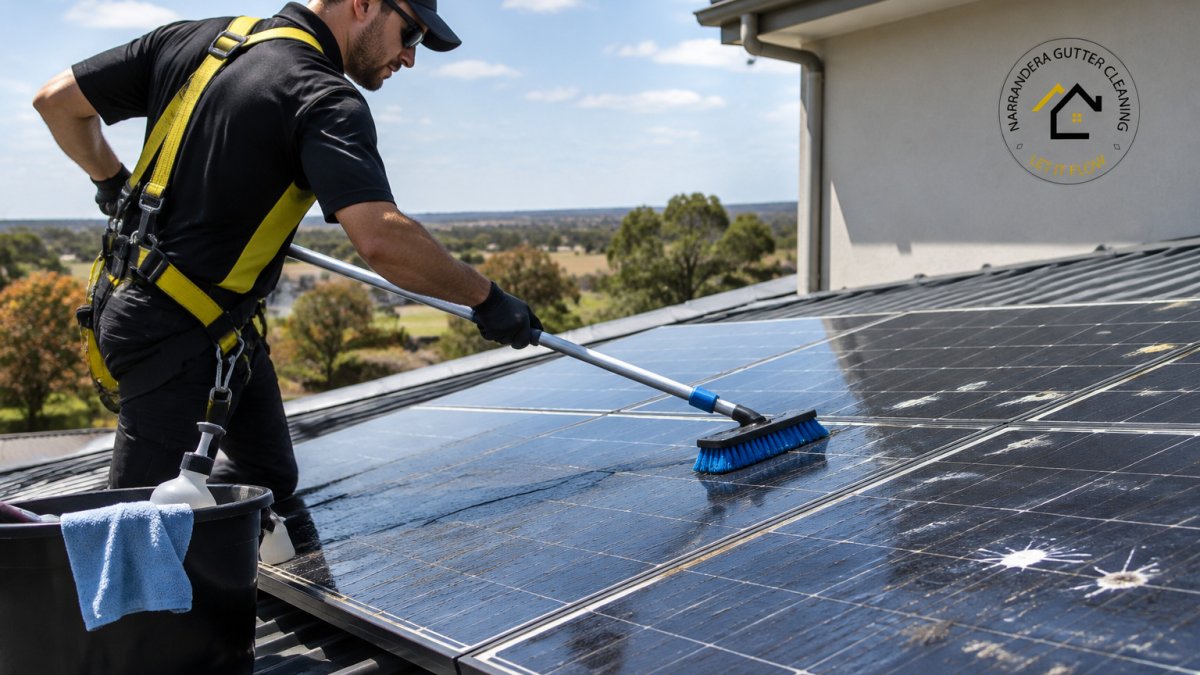
One more thing worth doing while you are up there: clean the solar panels. Dust and debris cut output, and the same access gets both jobs done at once.
Request a Free Quote for Pre-Summer Gutter Cleaning
Some jobs are a weekend and a ladder. Others are two storeys, a steep pitch, or a rural property with a kilometre of gutter line. Knowing which one you have is the whole decision.
If your gutters are high, long, or hard to reach safely, that is where we come in.
Before you book anyone, read our seven gutter cleaning quote facts so you know what a fair quote looks like. Then request a free quote and we will assess your property and give you a clear figure before any work starts.
We are fully insured and carry a 5★ rating. For a deeper look at preventing water damage from blocked gutters, our gutter water damage guide walks through the full chain from overflow to footings.
Summer does not wait, and neither should your gutters.
Frequently Asked Questions
Why should you clean gutters before summer?
Summer in the Riverina brings heavy rainfall and storm events after months of dry weather, so gutters are usually packed with leaves, twigs and dry vegetation just when water flow matters most. Clearing them first means rainwater can drain through the downpipes instead of overflowing into fascia, eaves and foundations. Dry debris also gives embers from a nearby fire something to catch on, so clean gutters reduce fire risk as well as water damage.
How often should gutters be cleaned?
Most homes need gutters cleared at least twice a year, and properties surrounded by large trees often need it three or four times. Time one clean for late spring, before summer storms, and another after autumn leaf drop. Rural and farm properties with windblown debris, dust and dry vegetation usually need a more frequent schedule. Check gutters after any major storm too, since debris can collect fast.
Is it safe to clean gutters yourself?
It can be, on a single-storey home with stable ground, a secured ladder and someone spotting you. It is not safe on two-storey or steep-roofed properties, and working near powerlines or on wet, sloping ground should be left to professionals. A ladder fall is one of the most common home injuries. If you cannot reach the gutter from the ground or a stable platform, book a professional clean rather than stretching.
Can clean gutters help reduce fire risks?
They help, but they are one part of a broader plan. Clearing leaves, twigs and dry vegetation from gutters removes fuel that embers can ignite, and keeping the roof and surrounds clear supports that effort. Gutter cleaning should sit alongside a property maintenance routine and your local fire authority's advice for your area. It lowers risk; it does not remove it entirely.